Opening
Whole soaring refinement found in current motorcars asks for an detailed awareness of diagnostic apparatuses, ordinarily regarding On-Board Diagnostics II (OBD2) and Tire Pressure Monitoring Devices (TPMS). Throughout Europe, Asia, and the US, these innovations execute using different frequencies. OBD2 standards are largely aligned globally, mainly utilizing ISO 9141-50, KWP2000, CAN, and others, but regional enforcements can pose minor differences. TPMS, however, is where major frequency diversities manifest. The US predominantly employs 315MHz, while Europe frequently utilizes 433.92MHz, and Asia reveals a more scattered range including both frequencies and additional bands. Hence, exact diagnostic instruments must be provided with the capacity to analyze these diverse frequencies to allow effective repair and maintenance.
Understanding TPMS Sensor Frequencies: A Global Guide (Europe, North America, Asia)
Grasping tire pressure monitoring system (TPMS) probe rates among the domain remains complicated. Usually, North countries predominantly utilize 315 MHz, despite some novel vehicles exploit 433 MHz. Alternatively, Europe and most of Asia mainly function on the 433 MHz frequency, with some country-specific variations appearing notably in some Asian countries. As such, critical to authenticate the accurate transmission leading up to procuring TPMS modules to ensure accordance and skip likely hurdles.
EV Diagnostic Tools: OBD2 Compatibility and TPMS Integration
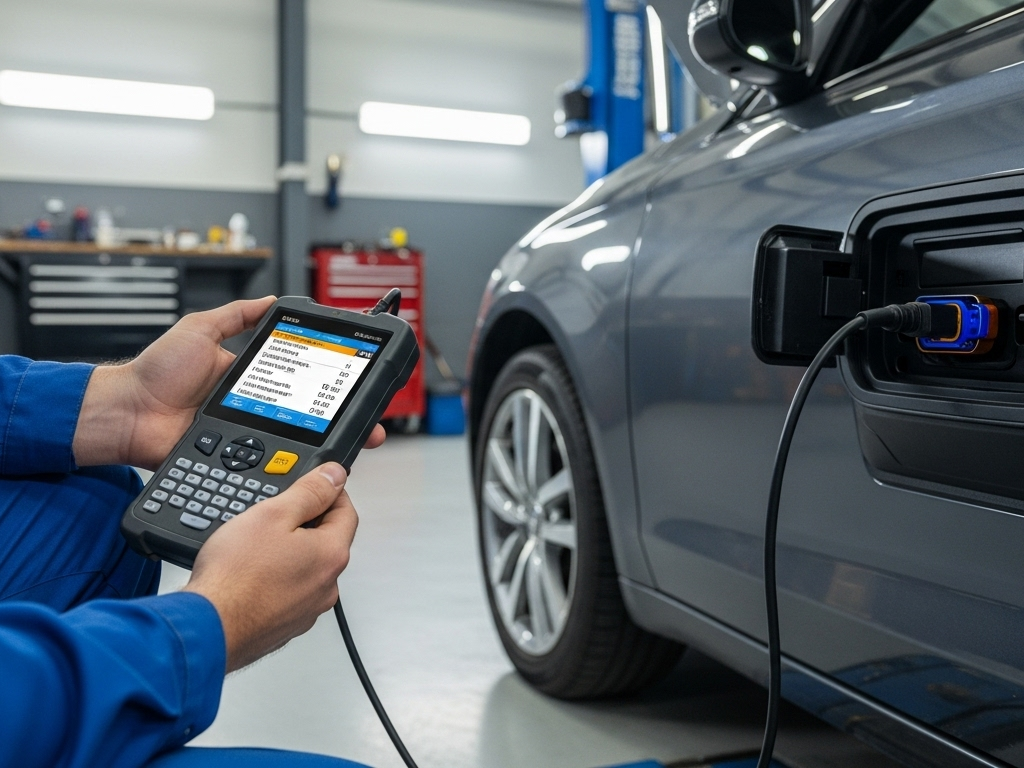
Cutting-edge voltage-driven car scanners are increasingly embracing vital functionality, particularly focused on both typical On-Board Diagnostics II (OBD2) compatibility and Tire Pressure Monitoring System (TPMS) combination. Several renewable rides utilize OBD2 ports for retrieving critical system readings, letting technicians and operators to identify likely issues. Furthermore, coherent TPMS connection provides faithful tire inflation outputs, assisting to optimized security and propulsion efficiency. This mixture of OBD2 access and TPMS operability symbolizes a substantial enhancement in EV transport diagnosis.
Tire Pressure Frequency Distinctions: The Continent vs. North American Territory vs. Asia - A Comprehensive Evaluation
The mechanisms responsible for watching tire pressure—TPMS—operate on individual radio waves, leading to significant regional distinctions. American Continent predominantly utilizes 315 MHz, though some contemporary vehicles are moving to 433 MHz. Continental Europe mandates 433.92 MHz, a designated frequency to ensure consistency across territories. Asian Region exhibits a more complex landscape, with particular areas using 315 MHz, others 433 MHz, and still additional areas employing a aggregation of both. This disparity poses challenges for workshops and car users when dealing with replacement TPMS detectors or diagnostic technology, necessitating careful confirmation of regional regulations to escape troubles and affirm proper effectiveness of the TPMS.
Auto Scanners for EV Cars: Tire Pressure Monitoring System Examination & Radio Wave Processing
Current transport evaluators are constantly increasing to assist battery machines, principally with respect to TPMS review. Unlike fuel combustion engines, zero-emission cars present exclusive hurdles when it comes to air pressure management verification. Many electrified automobiles use different tyre surveillance systems broadcasts requiring the instrument to correctly identify the radio wave in use. This feature authorizes experts to solely display tire pressure but also ascertain the particular band being sent by the tire monitoring probes, enabling in precise identification of bugs.
Asia TPMS Spectrum: What Need Learn?
Handling the world of wheel TPMS can be a hurdle, primarily due to the varying spectra utilized across the continent, Asia, and the United States. The EU’s vehicles predominantly use 433.92 MHz, while countless Asian countries employ 315 MHz and 433.92 MHz, creating a challenging situation for professionals. In the US, both 315 MHz and 433.92 MHz are widespread, with 315 MHz being more substantial. Therefore, understanding these regional contrasts is critical for accurately attending to TPMS failures and selecting the correct programming tools.
Progressing an Groundwork: Car Diagnostics, Electric Rides, and Tire Gauge System Device Broadcast Recognition
Concerning advanced motor vehicle technicians, only absorbing an main points about vehicle data, EV motor vehicle structures, plus air pressure detection device wave detecting signifies certain important further milestone. The former subjects dive about basic methods, entailing particular equipment along with ability allowing precisely identify along with solve complex challenges pertaining to car wheel levels, battery system efficiency, plus drive unit malfunction warnings. As well, correctly recognizing pressure sensor instrument wavelengths – commonly oscillate throughout alternative companies combined with categories – generally important in efficient setting.
EV Auto Assessment: Using OBD2 Scanners to Troubleshoot TPMS
Resolving Tire Pressure Monitoring Systems pressure detection tools in electric vehicles EVs often includes more than plainly visual inspection. Modern OBD2 testers offer significant ability to get TPMS data and spot potential failures. Utilizing these instruments, technicians can view fault codes, examine sensor status, and even apply sensor analyses, allowing for rapid diagnosis of pressure detection problems and minimizing outage periods. Such is especially important given the increasing complexity of EV devices.
Managing Tire Pressure Monitoring Systems Signals: A Practical Tutorial for Eurozone, Asia-Pacific, and the US & Canada
Adequately deploying tire surveillance systems throughout European Region, Eastern Asia, and United States and Canada requires a full awareness of the different wave channels they apply. Distinct from a even system, the world generally conforms to specific spectrum allocations. Example being Continental Europe primarily counts on 315 Megahertz and 433.92 MHz, while North American Region commonly relies on 315 Megahertz though a few modern cars should incorporate four-three-three point nine two MHz. Asia displays a more intricate picture, with many bandwidths practiced, guided by the territory over-the-air verification and machine builder.
- Think about regional policies regarding TPMS frequency.
- View your automobile manual for specific frequency.
- Use a pressure detecting scanner capable of reading diverse signals.
